A $23 million NIH grant to continue UC Davis Alzheimer’s Disease Research Center’s mission
By Nadine A Yehya
A legacy of research innovation, community engagement and patient care
(SACRAMENTO)
TheUC Davis Alzheimer’s Disease Research Center(ADRC) has received a five-year, $23 million P30 grant renewal from the National Institute on Aging (NIA). This funding supports ADRC’s mission of advancing Alzheimer’s disease and related dementia research, patient care and community engagement.
“This year marks ADRC’s 35thanniversary. We build on a legacy rooted in change and innovation and fueled by a vision of a lifetime of brain health for all,” said Charles DeCarli, the co-director of ADRC and the grant’s principal investigator.
The co-directors of ADRC, distinguished professor Charles DeCarli and professor Rachel Whitmer.
The center aims to develop more precise prevention and treatment for all individuals at risk of dementia and related diseases. This effort includes studying how early and midlife factors can impact brain health.
“We are interested in understanding why people age differently. What factors contribute to resilience and others increase the risks? Examining individual differences in trajectories of brain aging and transitions to dementia can help advance the science of healthy brain aging for everyone” said ADRC co-director Rachel Whitmer.Whitmer is a UC Davis Health professor of public health sciences and neurology and the chief of epidemiology.
Professor Alyssa Weakley presenting at one of the participant appreciation events.
Meeting people where they are — in their communities
DeCarli, a distinguished professor ofneurologyat UC Davis Health, has directed ADRC for the last 22 years. In 2001, he and UC Davis professors Dan Mungas and Bruce Reed put together an NIH grant application to fundamentally change ADRC’s approach of recruiting participants for clinical trials and research studies.
They proposed moving away from a strictly clinic-based specialty recruitment to a hybrid model with half of the participants coming from ADRC’s neighboring communities. That was a novel approach at the time. The outreach meant the ADRC teams would build strong long-term relationships with community partners and stakeholders.
“The idea was to try to meet people where they are, in their communities,” DeCarli said. “This approach results in more representative research cohorts, especially from the areas surrounding ADRC’s two sites in Sacramento and Walnut Creek.”
In 2026, the ADRC expanded to an almost entirely community-based recruitment. This led to research cohorts with better representation of African Americans and people of Hispanic and Latino heritage. Now, the center is extending its reach to include more people from Asian American communities.
Professor Oanh Meyer has partnered with the Vietnamese community in Sacramento to help understand how trauma is linked to the risk for Alzheimer’s and related dementia.
Driving discovery in Alzheimer’s and related dementia research
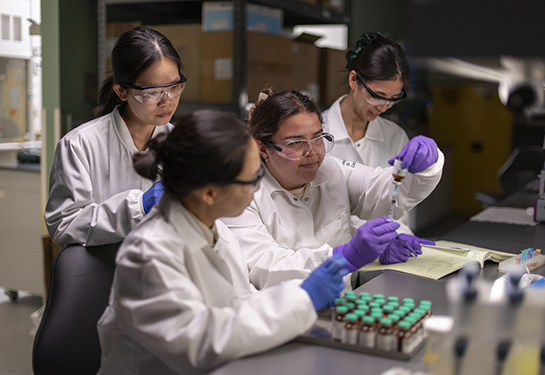
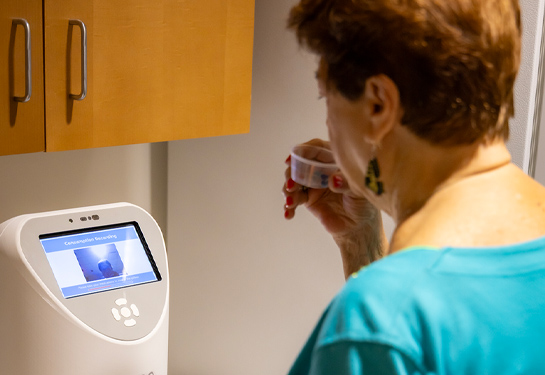
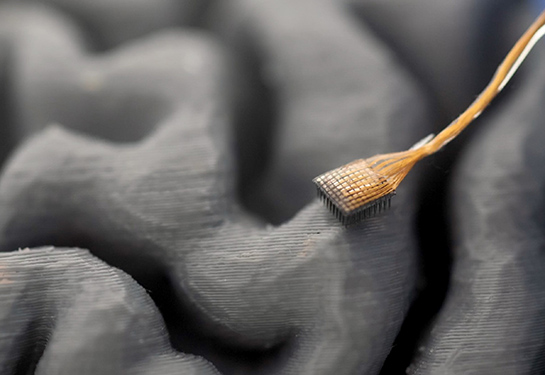
The ADRC team uses different tools to study the commonalities as well as the individual differences among people. They use advanced imaging technologies and identify blood biomarkers to help improve early diagnosis and inform treatment plans.
They also construct and validate assessment scales that reflect the diversity of the participants. Mungas, for example, developed the Spanish and English Neuropsychological Scales (SENAS) that works well with participants of Hispanic and Latino heritage and minimizes cultural and linguistic bias in research.Sarah Tomaszewski Fariasalso developed the Everyday Cognition (ECog) scale to detect early functional and cognitive changes in older adults.
The ADRC is also the home of many ongoing clinical trials. For example, it is a primary site ofthe groundbreaking US-POINTER trialwith Whitmer as one of its principal investigators. Early findings from this trial point tospecific lifestyle changesindividuals can make to enhance their brain health and reduce future risks.
In addition to research, the center offerscommunity programs and resourcesto support collective health. Also, its research education core, co-led by professorsOanh MeyerandAlyssa Weakley, serves as a training hub for the next generation of researchers.
“We are very proud of the center’s mentoring and training lifecycle. Some of ADRC’s core faculty grew up with us and got their training at this center as postdoctoral fellows. They received seed fundings for their first research projects as ADRC scholars,” Whitmer said.
The collaborative work of the various teams creates a centralized infrastructure that can advance the science of healthy brain aging.
“Our systematic building of the center makes a successful model that is efficient and productive in looking at multiple risk factors for aging and dementia within groups of people,” DeCarli said. This grant renewal is Decarli’s last. He is stepping down from ADRC’s leadership next year.
From Labs to Lives
This is a National Institutes of Health (NIH) grant (P30AG072972). Federal research funding helps transform promising discoveries into real-world breakthroughs that save lives and improve quality of life. Learn more about how public investment in UC Davis research powers innovation, strengthens the economy and advances human health in From Labs to Lives.