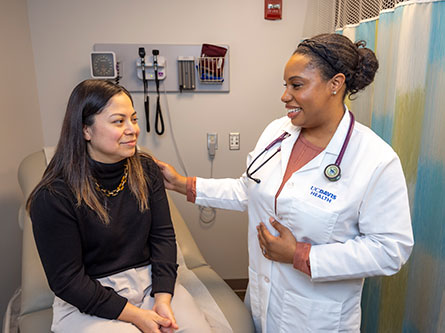


Choosing a primary care doctor is one of the most important decisions you can make for your health.
Your primary care doctor helps you stay healthy through preventive care, treats common illnesses, manages ongoing or chronic conditions and connects you with specialists when needed.
Use these 10 questions to help find a primary care doctor who fits your health needs, lifestyle and budget.
1. How do you find a primary care doctor?
The search for a primary care doctor often begins with recommendations from trusted friends, family members, coworkers and neighbors.
Another excellent resource is a physician directory for your preferred health system. In this directory you can find important information that includes:
- Clinics
- Education and training
- Philosophy of care
- Honors
- Patient reviews
You can also call UC Davis Health at 800-2-UCDAVIS or (800-282-3284).
Find a primary care provider and clinic that works for you
2. What kind of primary care doctor do you want?
When choosing a primary care doctor, consider whether you want someone who can treat your whole family or just you.
- Family medicine doctors care for patients of all ages, from babies to grandparents.
- Internal medicine doctors, or internists, provide treatment for patients 18 and older.
- Pediatricians focus exclusively on babies up to age 18.
- Adolescent medicine doctors treat preteens to young adults.
- Geriatric doctors treat only adults, usually 65 and older.
Read about why you should partner with a primary care provider
3. Where is the doctor located?
Convenience matters when choosing a primary care physician.
Here are some things consider:
- Distance between your home and the doctor.
- Distance between your workplace and the doctor.
- How the doctor’s clinic hours fit into your schedule.
- Availability of in-person and video visits for routine care.
An office or clinic nearby and access to telehealth services can make it easier to keep appointments and stay on top of your healthcare.
Get access to a system of world-class care
Find a primary care clinic that's convenient for you
4. Is the doctor accepting new patients?
Once you have a list of doctors, call their offices.
- Confirm they are accepting new patients.
- Ask when you can schedule a new patient visit.
- Ask to be placed on a cancellation list to reschedule for an earlier date.
Knowing a physician’s availability can help determine if they meet your current needs.
Find a primary care provider for you and your family
5. Does the doctor accept your insurance?
Always verify that the doctor accepts your insurance plan and is in your network of providers. Ask the doctor’s office staff:
- If the doctor accepts your PPO or HMO insurance.
- If there are other fees that insurance may not cover.
- If all services at the office are billed as in-network and covered by insurance.
Contact your insurance company to confirm the information about benefits, coverage and any extra costs you will be responsible for paying out of your own pocket.
Get answers about PPO vs. HMO insurance
6. How are same-day or urgent sick visits handled?
Healthcare issues can happen suddenly so it’s important to think in advance about how to respond.
- Ask if the doctor offers urgent appointments in person the same day you call.
- Find out if video or phone visits are offered on the same day.
- Discuss their policy for addressing health concerns after hours.
Knowing your options before you need urgent healthcare can reduce stress.
Read how UC Davis Health offers convenient healthcare for every situation
7. Who sees patients when the doctor is out of the office or on vacation?
Primary care doctors often work with a team of healthcare providers who can see patients when they are away.
- Ask who will cover for the doctor during vacations or other absences.
- Find out how you can learn about the other healthcare providers.
- Ask yourself if you will feel comfortable with another provider in an urgent situation.
It’s important to feel confident about the healthcare team in your doctor’s office, especially if you might be seen by other providers.
Learn about the difference between family medicine and internal medicine
8. How does the doctor coordinate care with specialists?
A good primary care doctor helps manage your overall healthcare.
- Confirm that the doctor will recommend specialists if needed.
- Ask who is responsible for scheduling appointments with specialists.
- Find out if the doctor’s clinic has specialists available at the same location.
Strong communication and coordination can make navigating the health system easier.
Explore our services and specialties in our Health Library
9. How does the doctor’s office communicate?
Communication is a key part of a positive healthcare experience. Many hospitals and healthcare groups use an online patient portal for things such as:
- Secure messaging
- Scheduling appointments
- Test results
- Prescription refill requests
You may also ask about:
- The time it takes for the office to respond to emails.
- If phone calls are returned the same day.
- If the doctor personally calls and emails patients.
Sign up for our Health Highlights e-newsletter
10. What is the doctor’s approach to patient care?
A physician’s philosophy of care reflects how they approach patient relationships, treatment decisions and overall health management.
Look at the physician’s biography or their medical clinic website for information about:
- Communication style
- Putting patients first
- Preventive care
- Shared decision-making
Visiting the office may also help you determine whether the environment feels like a good fit for you.
Read doctor biographies and find a provider
Find all the healthcare you need at UC Davis Health
This blog was medically reviewed by internal medicine physician Anca Knoepfler, associate medical director for UC Davis Health Community Physicians.