

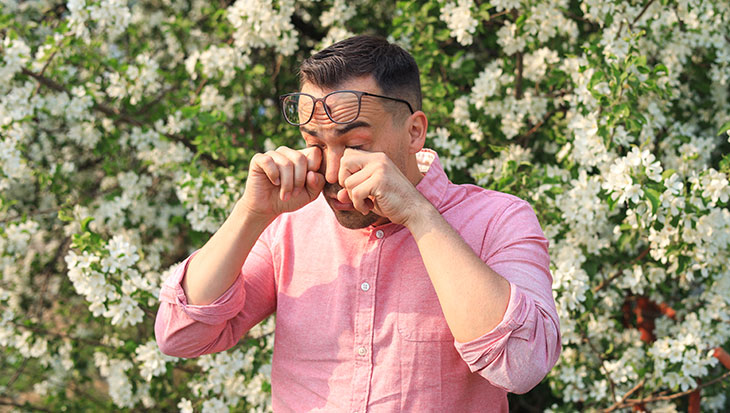
Spring can be a rough time if you have seasonal allergies. It’s the time of the year when pollen is active, causing allergic rhinitis, also known as hay fever.
These allergies come with irritating symptoms such as watery eyes, sneezing, stuffy nose, and itchy throat. In some cases, allergies can lead to asthma, a condition that causes breathing difficulties.
Climate change has caused us to have warmer weather in general, leading to grasses and trees growing earlier than normal. This means we can expect a more severe year for seasonal allergies.
There are things you can do to reduce your symptoms if you suffer from allergies, even during a tough allergy season.
Symptoms of seasonal allergies
Hay fever, or seasonal allergies, can happen in the spring, summer and early fall. Seasonal allergies typically trigger the following symptoms:
- Runny nose and congestion
- Cough
- Itchy nose or throat
- Watery, itchy, and/or red eyes
- Sneezing
- Mucus that runs down the back of your throat (postnasal drip)
- Swollen and bruised-looking area under the eyes
- Tiredness, usually because of poor sleep due to nasal congestion
Sign up for our Health Highlights e-newsletter
How are seasonal allergies diagnosed?
Finding the causes of your allergies can help you avoid them. Luckily, hay fever is usually easier to diagnose than other allergies. If you have any of the symptoms listed above at a specific time of the year, you may have seasonal allergies. Your doctor can also do an exam of your nose and throat to see if you suffer from seasonal allergies.
A skin prick test can quickly identify allergic reactions to dozens of common triggers, including mold, dust, pollen and pets. This test involves a tiny scratch or prick on the skin, usually on the forearm or back. Then a tiny bit of liquid with the allergen is put into the skin. After 15 minutes, if a red or raised bump shows up, there might be an allergy to that substance.
Another way to diagnose seasonal allergies is to get a blood test. Each area of the country has specific pollen profiles. A blood test can determine which pollens you’re sensitive to.
Allergy testing should only be done if you are having symptoms. Positive testing without a history of symptoms after exposure does not mean you have a true allergy.
See why you should partner with a primary care provider
Tips to limit allergy symptoms
Here are some ways to help reduce your seasonal allergy symptoms:
- Avoid high exposure to pollen: When the weather is going to be warm, avoid mowing the lawn yourself and stay away from moldy piles of leaves. People with seasonal allergies also should avoid irritants such as strong chemicals and pollution.
- Keep your home and car clean of pollen: On days when pollen counts are high, keep your doors and windows closed. Stay inside, especially during afternoons and evenings when pollen levels are highest. Cool your home using air conditioning but stay away from humidifiers and swamp coolers.
- Clean off outdoor pollen residues: After being outside on high-pollen days, shower to wash away pollen and put on clean clothes. Use saline nasal wash to help clear allergens from your nose. Make sure to use a premade saline rinse or make your own rinse with distilled or boiled tap water. Regular tap water can cause a brain infection.
- Know your allergies: A simple blood test or a skin test at the doctor’s office can identify what you’re allergic to. Identifying these allergens is important to developing an effective treatment plan.
- Talk to your doctor: Ask your doctor about treatment options and follow that treatment plan.
Find out the daily pollen count in your area with this allergy report
Treating allergies: From over-the-counter options to immunotherapy
Treatments for seasonal allergies start with avoiding irritants that cause symptoms. This can include using some of the tips listed above.
Your doctor can also recommend over-the-counter or prescription medications to treat seasonal allergy symptoms. Nasal steroid sprays are usually preferred over oral antihistamines because they work better and directly reduce allergy-related swelling and inflammation.
The next option for patients with tough allergies is immunotherapy. This addresses the body’s immune response to allergens. Through small increases in exposure to specific allergens, the body builds tolerance to these substances until it stops seeing them as a threat.
This treatment requires regular trips to a doctor’s office for injections (allergy shots) or under-the-tongue tablets. This approach can take three to five years before treatment is completed. It can be very effective for about 85% of allergy sufferers.
Learn more from the National Institutes of Health: Seasonal allergies at a glance
This blog was medically reviewed by allergist/immunologist Fatema Mollah.