Optometry, Eyeglasses and Contact Lenses
Get comprehensive eye care from expert optometrists. We provide routine eye exams, vision correction and specialized care to protect and improve your vision at every stage of life.
Medically reviewed by Kaaryn Pederson, O.D. on Aug. 11, 2023.
Dedicated Vision Correction Services
Eyeglasses and contact lenses can improve how clearly you see. But eye care is about much more than vision correction.
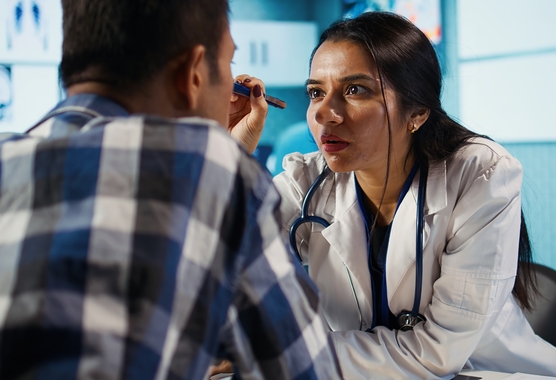
At UC Davis Health, our optometrists provide comprehensive eye care for children and adults. They serve as your primary eye care providers, performing detailed eye exams, diagnosing vision problems and eye diseases, and prescribing glasses or contact lenses.
For more complex conditions, our optometrists work closely with ophthalmologists (doctors specializing in eye surgery and advanced treatments) to ensure you receive the right level of care.
We have several convenient optical shop locations where you can order eyeglasses. Our team helps you choose options that fit comfortably, meet your vision needs and match your lifestyle. Appointments are required for optical services.
On this page
Types of Vision Correction Services
We offer a full range of services — from routine care to advanced specialty optometry — to help you see clearly and maintain long-term eye health.
Eye Exams
Our optometrists perform eye exams to diagnose vision problems for children and adults. These exams assess vision clarity, eye coordination, focusing ability and overall eye health. We also screen for early signs of eye disease.
Care for Complex Vision Needs
We provide specialized care for patients with complex or chronic eye conditions, including diabetic eye disease, corneal disorders and other vision-related complications. Our optometrists work closely with ophthalmology specialists to coordinate care before and after procedures such as cataract, glaucoma and retinal surgeries, helping ensure continuity and optimal outcomes.
Contact Lenses and Fittings (Routine)
We offer a full range of soft contact lenses to meet everyday vision needs. This includes toric lenses for astigmatism, multifocal lenses for presbyopia and colored lenses for cosmetic enhancement. Our team provides personalized fittings and education to help ensure safe, comfortable wear and clear vision.
Medically Necessary Contact Lenses
For patients with complex eye conditions, we provide advanced contact lens options that go beyond standard vision correction. These medically necessary lenses are used to improve vision and protect the eye in conditions such as keratoconus, aphakia and irregular corneas. Our specialists are experienced in fitting gas permeable, scleral, hybrid and prosthetic lenses. These custom lenses can significantly improve visual quality, comfort and overall eye health when standard lenses or glasses are not effective.
Ocular Surface Disease Care
We diagnose and manage conditions affecting the surface of the eye, including dry eye disease, blepharitis and meibomian gland dysfunction. Treatment plans are tailored to your needs and may include prescription medications, in-office therapies and recommendations for long-term symptom management. Our goal is to improve eye comfort, protect the health of the ocular surface and support better vision — especially for patients who struggle with contact lens wear or fluctuating vision.
Eyeglasses
Our optometrists prescribe lenses tailored to your vision needs. Our optical shops offer a wide range of eyeglass frames, including designer and functional options, as well as sunglasses and reading glasses.
Medications
When appropriate, we prescribe medications to treat eye conditions such as dry eye, glaucoma, and infectious and inflammatory eye diseases, such as pink eye (conjunctivitis) and uveitis.
Low Vision Services and Aids
For patients whose vision cannot be fully corrected with standard lenses or surgery, we offer low vision evaluations to assess functional vision and discuss strategies for maximizing remaining vision.
Request an Appointment
As Sacramento's No. 1 hospital, you'll benefit from unique advantages in primary care and specialty care. This includes prevention, diagnosis and treatment options from experts in 150 specialties.
Referring Physicians
To refer a patient, submit an electronic referral form or call.
Patients
Call to make an appointment.
Consumer Resource Center
Your Eye Exam: What to Expect
Regular eye exams help detect vison problems early and identify eye diseases before they affect your sight. Your provider will recommend how often you or your child should be seen based on age, risk factors and medical history. A typical eye exam may include:
Visual Acuity Test
You read aloud letters or symbols on an eye chart to measure how clearly you can at a distance. This determines visual acuity. For example, visual acuity of 20/20 vision, which means you can clearly read the eye chart from 20 feet away without vision correction.
Refraction Test
This test identifies the lens prescription that provides the clearest vision. Your provider will guide you through a series of lens choices to find the best correction.
Slit Lamp Examination
Your provider uses a specialized microscope with a bright light (slit lamp) to examine the front structures of your eye, including the cornea, eyelids, iris and lens. This allows for a detailed evaluation of eye health and helps detect conditions such as dry eye, cataracts and infections.
Intraocular Pressure (IOP) Measurement
We measure the pressure inside your eye to screen for conditions such as glaucoma. This test is quick and comfortable and may be done using a small device that lightly touches the surface of the eye.
Pupil Dilation
Your provider may use special eye drops to dilate (widen) your pupils. This allows a more detailed view of the retina and optic nerve, helping detect conditions such as macular degeneration, diabetic eye disease and retinal tears. Your vision may be blurry and light-sensitive for a few hours afterward.
Ocular Imaging
When needed, widefield retinal imaging captures a broad view of the retina, allowing your provider to identify changes or disease in the peripheral retina. Advanced imaging technologies provide detailed views of the eye that are not always visible during a standard exam. Optical coherence tomography creates cross-sectional images of the retina to help detect and monitor conditions like glaucoma and macular disease.
Additional Eye Testing
Depending on your needs, your provider may also evaluate eye alignment, focusing ability, and depth perception These tests help ensure a complete assessment of your vision and eye health.
Eye Health Care
In addition to getting regular eye exams, healthy habits play an important role in protecting your vision.
Maintaining a healthy lifestyle
Maintaining a healthy weight, eating a balanced diet, staying active and managing conditions like diabetes can reduce your risk of eye diseases.
Protect your eyes
Wear sunglasses with ultraviolet protection and use safety glasses when participating in certain sports or high-risk activities.
Avoid or quit smoking
Smoking increases your risk of serious eye conditions, including cataracts and optic nerve damage. Talk to your provider about effective ways to quit tobacco.
Awards and Recognitions
Ranked among the best in 6 specialties
A U.S. News & World Report best hospital in cancer care, cardiology, heart & vascular surgery, geriatrics, neurology & neurosurgery, orthopedics, and pulmonology & lung surgery.
Ranked among the nation’s best children’s hospitals
U.S. News & World Report ranked UC Davis Children’s Hospital among the best in pediatric nephrology, orthopedics*, and neonatology. (*Together with Shriners Children’s Northern California)
Ranked Sacramento’s #1 hospital
Ranked Sacramento’s #1 hospital by U.S. News, and recognized in 23 types of care including acute kidney failure, cancer care, cardiology, heart & vascular surgery, COPD, colon cancer surgery, diabetes, diabetes & endocrinology, ear, nose & throat surgery, gastroenterology & GI surgery, geriatrics, gynecological cancer surgery, heart arrhythmia, heart attack, heart failure, hip fracture, hip replacement, leukemia, lymphoma & myeloma, lung cancer surgery, neurology & neurosurgery, orthopedics, pneumonia, pulmonology & lung surgery and stroke.
The nation’s highest nursing honor
UC Davis Medical Center has received Magnet® recognition, the nation’s highest honor for nursing excellence.
World-class cancer care
One of ~59 U.S. cancer centers designated “comprehensive” by the National Cancer Institute.

A leader in health care equality
For the 13th consecutive year, UC Davis Medical Center has been recognized as an LGBTQ+ Healthcare Equality Leader by the educational arm of America’s largest civil rights organization.
Latest Eye Health News