
Academic Programs
Vitreoretinal Surgery
Established over 30 years ago, the AUPO-FCC compliant UC Davis Eye Center Vitreoretinal Surgical Fellowship has a long tradition of training successful retinal specialists for careers in academia and private practice.
The two-year program covers all aspects of medical and surgical vitreoretinal care—including ocular trauma, uveitis, oncology, and retinopathy of prematurity—supported by robust basic science and clinical research opportunities.
The fellowship alternates between matching one fellow and two fellows per year. Fellows train closely with full-time faculty at the Tschannen Eye Institute on the Sacramento campus and the Mather Veterans Administration Medical Center.
Our Team
-
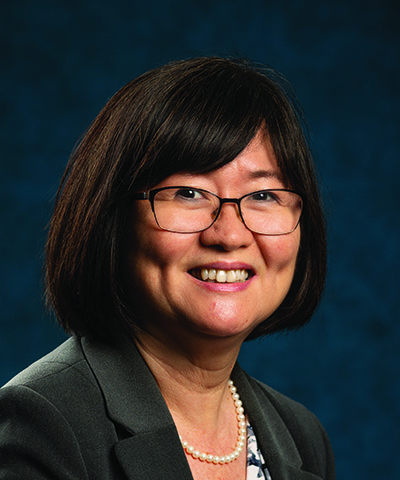
Susanna S. Park, M.D., Ph.D.
Vitreoretinal Fellowship Program Director
Barbara A. & Alan M. Roth, M.D., Endowed Chair in Discovery, Education and Patient Care in Vision Science
Director, Vitreoretinal Fellowship and Retina Division
Professor, Retina
Department of Ophthalmology & Vision Science -
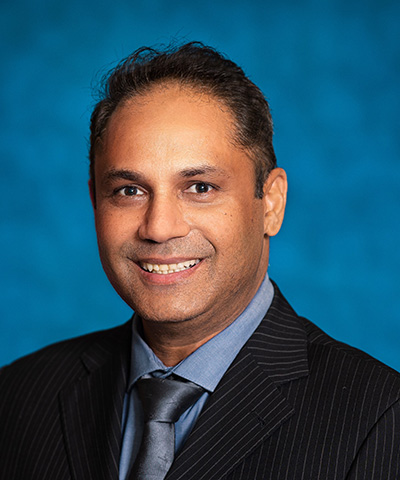
K. Thiran Jayasundera, M.D., M.S., F.A.C.S.
Natalie Fosse Endowed Chair in Vision Science Research
Department Chair
Professor, Retina
Department of Ophthalmology & Vision Science -
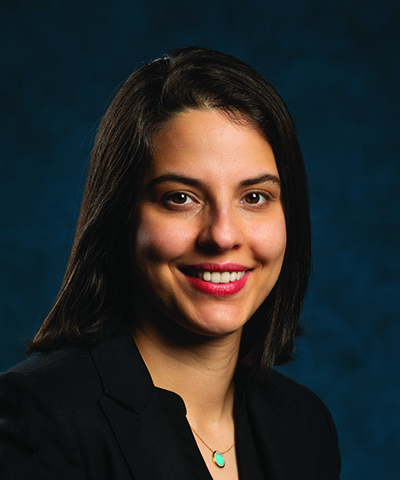
Parisa Emami, M.D., M.P.H.
Director, Ocular Inflammation and Uveitis
Associate Professor, Retina and Uveitis
Department of Ophthalmology & Vision Science -
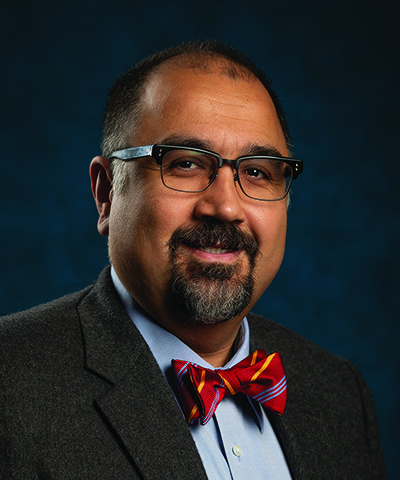
Ala Moshiri, M.D., Ph.D.
Professor, Retina and Vitreoretinal Surgery
Department of Ophthalmology & Vision Science -
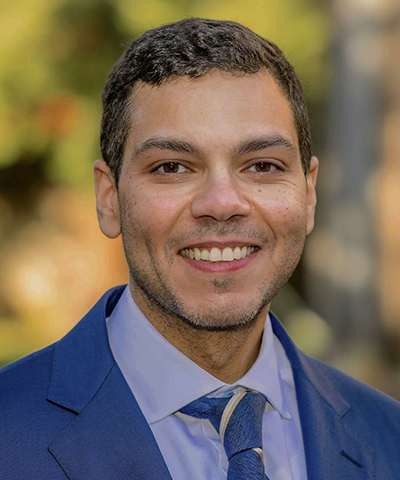
Kareem Moussa, M.D.
Associate Professor, Retina and Uveitis
Department of Ophthalmology & Vision Science -
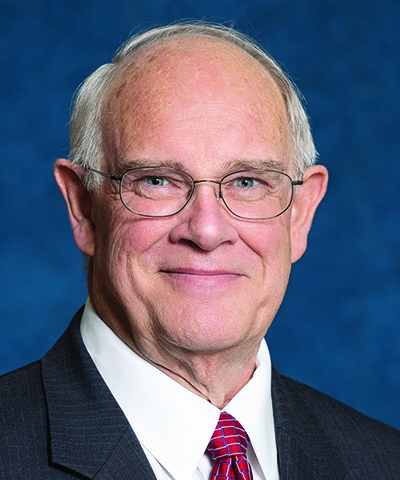
Paul A. Sieving, M.D., Ph.D.
Neil and MJ Kelly Presidential Chair in Vitreoretinal Science
Emeritus Distinguished Professor, Retina
Research Director
Center for Ocular Regenerative Therapy
Retinal and Macular Dystrophy
Department of Ophthalmology & Vision Science -
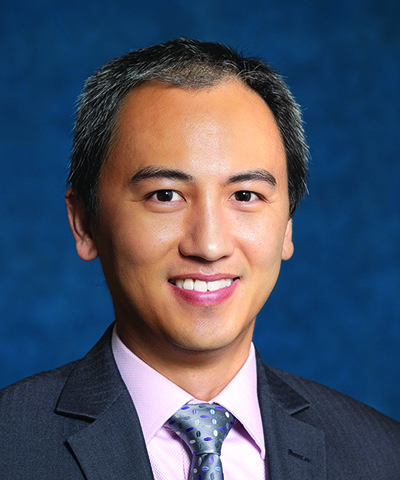
Glenn Yiu, M.D., Ph.D.
Professor, Retina
Director, Tele-medicine
Department of Ophthalmology & Vision Science -
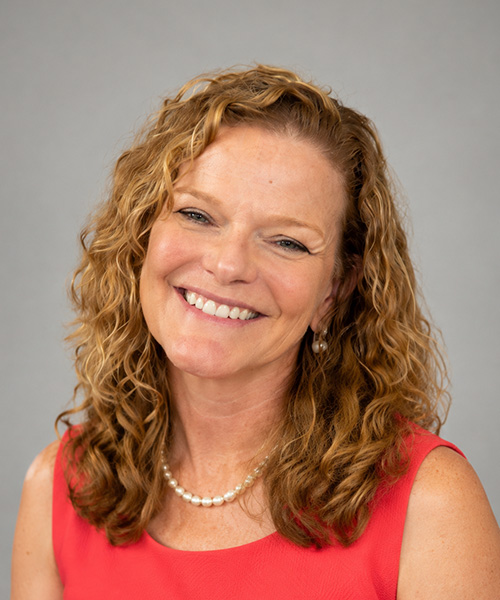
Vashon Elmer
Fellowship Coordinator
Department of Ophthalmology & Vision Science
vrelmer@health.ucdavis.edu
The two-year fellowship provides in-depth training in a broad spectrum of vitreoretinal surgeries and laser techniques under the guidance of surgical faculty. Cases reflect a diverse university and VA patient population, emphasizing the repair of primary and complex retinal detachments, complications from proliferative diabetic retinopathy, scleral buckling, macular surgery, posterior segment trauma, and vitrectomies for complex uveitis and endophthalmitis. Fellows also gain extensive experience in laser photocoagulation, ocular oncology, uveitis, inherited retinal diseases, retinopathy of prematurity, and intravitreal injections for various pathologies and clinical trials.
Both medical and surgical management of vitreoretinal diseases are emphasized through direct interaction in clinical and surgical situations. A weekly fluorescein/imaging conference will also provide didactic discussions, while a discussion of challenging surgical and medical cases, a retina journal club, and updates on research activities occur at a monthly retina service conference.
We have a broad mix of patients, ranging from private to medically indigent, providing a wide range of pathologies for a balanced vitreoretinal fellowship experience. Several clinical trials are also being conducted to provide insight into conducting clinical research, and fellows have opportunities to participate in these clinical trials as investigators.
Applications for fellowship beginning in July of each year are accepted through the Ophthalmology Fellowship Matching Program, SF Match. Completed applications must be received date indicated in our on-line profile at SF Match. Candidates will be notified in early September about the interview process, which will take place in Sacramento at the UC Davis Medical Center over two Saturday sessions in October and November – interviews at the annual American Academy of Ophthalmology meetings are not offered.
Requirements:
- Full California medical licensure (not a training license)
- Clinical positions cannot be offered to individuals who are International medical school graduates and do not qualify for a full California licensure
The vitreoretinal surgery fellowship participates in the SF Match Program
Duration of Program
The program is a two-year fellowship, beginning July 7.
Teaching and Education
As the year progresses and the fellow’s knowledge base quickly expands, the fellow will take on more direct teaching responsibility of the resident and medical students on the service. The fellows are expected to organize the weekly fluorescein/imaging conference, attend departmental didactics on Friday morning, participate in quarterly department journal clubs, and prepare presentations for the monthly Retina Service meetings, Grand Rounds and other departmental CME events.
Research
Although this is primarily a clinical fellowship, all fellows are required to present at least one research project at the annual UC Davis Resident/Fellow Research Symposium held at the end of the year. Research projects have varied in the past, depending on the interests of the fellows, and may range from retrospective chart reviews, prospective clinical studies and preclinical laboratory research. All research projects are conducted with the intention to publish the findings.
Call
The fellows take turns being available for residents to contact by pager or phone with questions about the management of retinal pathology seen in the emergency room or after hours. Retina faculty also take call and are available for consultation and urgent after hour surgeries with the fellows. Additionally, the fellows will take attending call (about 2 weeks per 6 months) where they will round on inpatient ophthalmology consults with the consult resident and staff surgery for ruptured globes with the chief resident. Ample time is available for fellows to explore the beautiful California region despite their call responsibilities.
Salary is provided based on the PGY salary scale approved annually by the University of California, Office of the President, and posted at UC Davis Health Resident Program. The first-year fellow will be paid at the level of a PGY 5 and the second-year fellow will be paid at the level of a PGY 6.
In addition to your salary, UC Davis Health will provide you with health, dental, vision, life and disability insurance. UC Davis Health also provides comprehensive professional liability coverage. Additional information may be found on the UC Davis GME website at UC Davis current residents and fellows page.
Fellows are also allotted vacation time and education days. Travel reimbursement is available for scientific presentations at professional meetings, and attendance/participation at appropriate meetings is encouraged.
Our academic health center includes

UC Davis Medical Center and Rehabilitation Hospital


Betty Irene Moore School of Nursing
What to Expect


Events
Our continuing education provides top-tier learning opportunities that improve clinical skills and professional performance to optimize patient eye care.
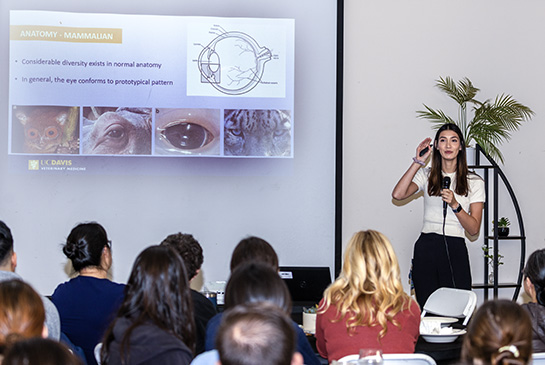
Grand Rounds
Each year, the UC Davis Eye Center provides a series of Grand Rounds designed to provide the community and our region with high-quality continuing medical education in each subspecialty of ophthalmology.
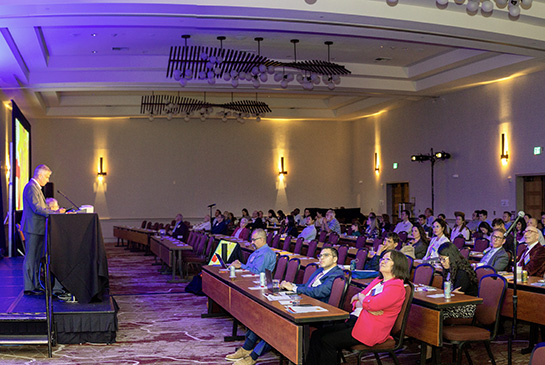
Napa Eye Symposium
Earn continuing medical education credit at the annual Napa Eye Symposium which showcases a clinically oriented update for all ophthalmology specialties.
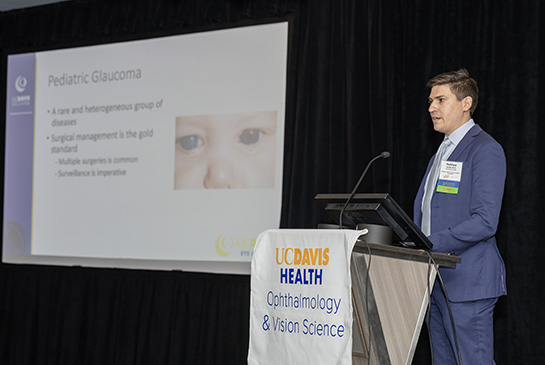
Resident, Fellow and Alumni Research Symposium
Earn continuing medical education credit at the annual Resident, Fellow and Alumni Research Symposium, where residents and fellows present their ophthalmology research projects to alumni, volunteer clinical faculty, ophthalmologists and the community.
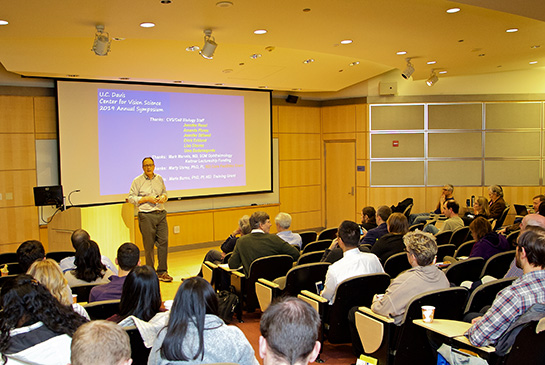
Center for Vision Science Symposium
Each year, the Center for Vision Science hosts a one-day symposium dedicated to basic and translational science in vision at UC Davis.

